Continuation from Anime Legacy | Tragic Absence. Why is Essential. Greece Needs Its Own Studio Ghibli. 2026-Part E’: Anime-Legacy | Greece-needs-its-Ghibli-part E’
9️⃣ Anime Legacy | Can we Greeks Achieve a Cultural Renaissance?
See the anime images below:

Below are more positive examples from Japan :

The problem has never been our geographical size alone, but the lack of vision and the attachment to a sterile “tradition” that fears the technological evolution of art.
It is tempting to reduce the comparison between us and Japan to population size. Japan has 120.000.000 indigenous citizens; our Greece barely reaches nine. Yet history repeatedly shows that demographic scale alone does not automatically produce cultural power. What matters is not the crowd a nation has, but whether it develops a cultural strategy- long-term planning, institutional continuity, and deliberate investment in symbolic production. Civilization does not become influential by accident. It becomes influential when treated as infrastructure. Japan did not become an animation powerhouse because it was large, but because it recognized early that storytelling, visual language, and character creation could be systematized, exported, and sustained. Size creates possibility. Strategy creates legacy.
The Comparison: Greece and Japan – Not Size, but Will.
The Size Argument (Population & Geography)
Yes:
• Japan: ~125 million people
• Greece: ~9 million people
Population matters for:
• Market size
• Domestic consumption
• Industrial scalability
• Cultural export capacity
But population alone does not determine cultural power.
National Will vs National Narrative
Japan’s post-war narrative was: “We will rebuild and surpass.”
Greece’s post-war narrative often became: “We survive despite.”
Our Greece, after 1922 and especially after the Civil War, was trapped in a model of
underdevelopment and dependence.
The comparison with Japan indeed seems unequal given the size difference, but the essence lies in the deindustrialization and political will you mentioned.
- The failure of deindustrialization
Animation is not only an art, but it’s also a functional industry. It requires know-how, production lines, and investment in equipment.
• Japan, after World War II, used animation (anime) as part of its heavy industry and as an export product.
• We, on the contrary, chose the model of “reciprocity” and tourism. Governments preferred live-action because it was cheaper, made “on the spot” and served direct domestic consumption, without requiring the complicated infrastructure that an animation studio needs. - The “small, but glorious” country complex
The decline after 1922 established a timidity. Our governments used live-action cinema and TV as tools for national homogeneity; they saw the animation art with scepticism, or even with contempt. Animation was considered “foreign”, or “childish”, something that did not fit in the narrative of “traditional Greece” that they wanted to project. Thus, while countries with similar populations (e.g., Belgium, the Czech Republic, and Hungary) built a huge tradition in animation, Greece was left behind. - The “guilt” of governments
There was deliberate neglect. Animation in ours was never treated as a strategic sector, but as an “unnecessary outlet”. Even today, most efforts are made by individual creators struggling alone, while the state subsidizes television reality shows of dubious quality.
How do we refute the argument of size?
When they tell me that “we are a small country”, I give as an example:
• Ireland: A country of 5 million that, with the studio Cartoon Saloon (creators of ‘Song of the Sea’), has reached the Oscars, because the state invested in the infrastructure.
• Estonia: With a population of just 1.3 million, it has one of the most recognizable animation schools in the world. - If we wished to cultivate a serious animation ecosystem, it would not require imitating Japan, nor massive population growth. Besides, either Norway or Sweden has size and wealth, but not a national will for animation infrastructure. It would require commitment. First, animation must be recognized as a cultural capital rather than juvenile entertainment. Universities and art schools would need structured animation departments connected to industry rather than isolated academically. Public broadcasting could commission short animated works rooted in our recorded prehistory(: mythology), ancient history, and contemporary narratives. Small studios could be supported through tax incentives and co-production agreements with European partners. Festivals and digital platforms could showcase domestic creators, allowing talent to remain rather than emigrate. None of these demands miracles. It demands coherence, patience, and the will to treat imagination as a national asset. How Greece Can Reclaim Its Animation Potential to the Fullest
•Lessons from Japan’s Post-War Rebirth
After WWII, Japan utilized anime and manga to rebuild its national identity (e.g., Astro Boy’s themes of peaceful coexistence and technology). Greece, navigating its own modern crises, could similarly use animation to reinterpret its heritage. Imagine a sci-fi epic based on Jason and the Argonauts, or Byzantine political intrigue told with the depth of Legend of the Galactic Heroes.
Adopt Discipline, Not Conformity.

What can we learn from civilizations that treated animation seriously? Will we learn from Japan’s maturity? Example: Since the 20th century, the standard school attire in Japan has been stable. For us, standard school attire was abolished in 1984 by the PASOK.
• Japan/China: Standard uniforms for a century → external uniformity fostering internal focus, discipline, and collective identity.
• Greece: Abolished in 1984 by PASOK → external freedom masking internal chaos, loss of shared identity, and a vacuum filled by commercialized individualism.
The uniform represents a social contract. Japan kept it, using it as a canvas for subtle rebellion (as seen in anime). The governments discarded it in the name of progress, but without providing a new, meaningful structure. The results weren’t liberation but daily asymmetry and a constant loss of belonging—generations dressed in globalized fast fashion, culturally adrift, and without encouragement to wear a clean uniform.
We should look to Japan’s internal discipline rather than its external conformity. In Japan, the school uniform is not merely a tool for sameness; it is a symbol that succeeds because it exists within a culture that prizes meticulous craft, profound respect for the artisan, and the principle of kaizen—the relentless pursuit of continuous improvement. Greece needs this commitment to the “process,” not the “packaging.”
The Sacred Feminine. See a previous post of mine, related to the topic:https://mangaanimeblogger.com/?p=2645 To truly understand the psychological depth of the ‘Sacred Feminine’ theme in manga and anime, I highly recommend reading Beautiful Fighting Girl by Saito Tamaki. It’s a fascinating deep dive into how otaku culture perceives and connects with fictional characters. If you want to add this essential piece of media theory to your collection, you can find it on Amazon here:https://amzn.to/3QSZnLC

Rei Hino (Sailor Mars) as the Model.
Rei Hino/Sailor Mars.
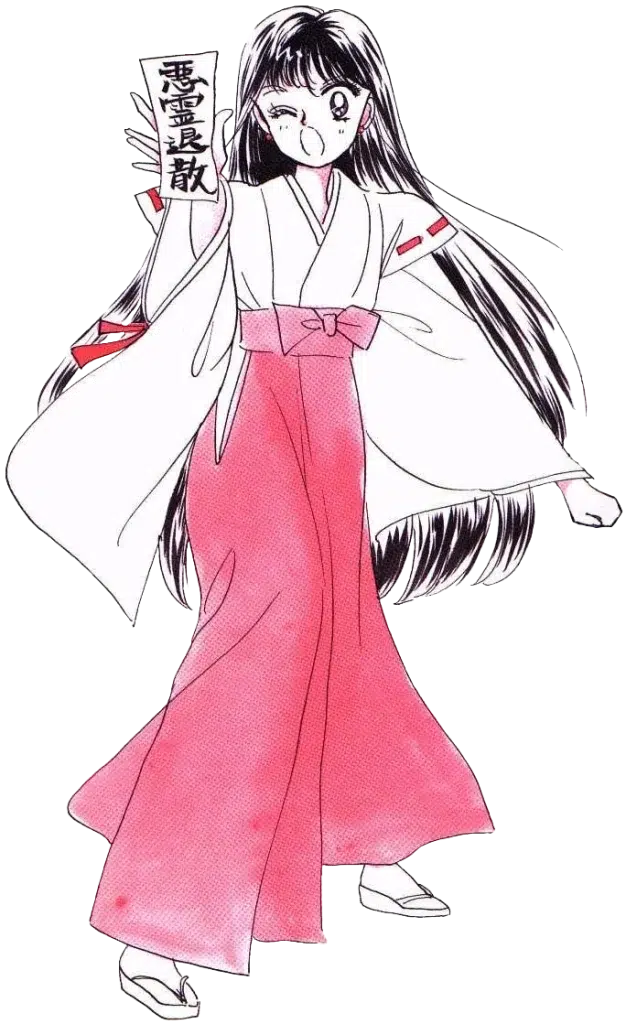
She is:
- A miko (Shinto shrine maiden) who works at Hikawa Shrine with her grandfather
- A Sailor Guardian who fights to protect Earth
- A student at a Catholic school (a brilliant synthesis of traditions)
- A powerful, independent young woman who is not a damsel.
She embodies exactly the woman spiritually grounded, combat-capable, intellectually sharp, and socially respected. She is not defined by male approval. Her power comes from her training, her lineage, and her sacred office.
To achieve a true cultural renaissance, we might look beyond its immediate theological demands and toward the sacred roles of antiquity. In ancient Greece, women held powerful spiritual agency as priestesses, a status that shares a striking nuance with the standard Japanese miko—famously embodied by characters like Rei Hino (Sailor Mars). Unlike the later Christian doctrine that often framed women as secondary or ‘inferior’ to men, the ancient Greek priestess and the Shinto miko both represent a woman as a direct intermediary to the divine. Could Greek society reclaim this nuanced status, moving past binary ‘feminism’ to restore a position where the feminine is inherently sacred and authoritative?” https://spb.hse.ru/en/ba/oriental/students/diplomas/925075918 : The Role of Miko Shrine Maidens in Shintoism: Origins and Modern Time Student: Anastasiia Gusarevich. Supervisor: Vasilii Shchepkin, https://www.gr.emb-japan.go.jp/itpr_el/lecture_052026.html : Lecture: Shinto and Ancient Greek Religion (the event is full).
The usual academic literature focuses on maiko (apprentice geisha), not miko https://www.st-andrews.ac.uk/library, https://scholarworks.lib.csusb.edu/worldlang-publications/5/ , https://www.ucpress.edu/flyer/books/maiko-masquerade/paper. The University of California Press has published Jan Bardsley’s Maiko Masquerade (2021), which traces how maiko transformed from stigmatized figures to icons of exemplary girlhood in Japanese popular media. https://library.artcenter.edu/record=b1514901~S7 Netflix has even produced The Makanai: Cooking for the Maiko House (2023), which scholars analyze as part of Japan’s “Cool Japan” soft power strategy. But here is the crucial absence: Nowhere in these search results is there any discussion of miko either on the US West Coast, nor in our media coverage. The academic sources focus on maiko; the fan sources focus on anime tropes. The miko, as a living religious figure—a woman serving at a Shinto shrine, performing rituals, embodying sacred authority—is almost entirely absent from the study frame that reaches Greek audiences.
The First Reason: The “Geisha Filter”
When our (and Western) media report on Japan, they reach for what they already recognize. The geisha and maiko have a long history in Western imagination. As one scholar notes, early photographs of geisha sent to the West in the Meiji era fueled Western fascination, and figures like Sadayakko (the first geisha to perform overseas) became symbols of “Asian beauty and mystery”.
The miko, by contrast, has no such history in Western consciousness. She is not a figure of exotic mystery or some artistic performance. She is a religious functionary, and Western media have never known what to do with non-Christian religious figures who are neither nuns nor exotic “priestesses” in the Orientalist sense.
When Greek journalists look for “interesting” stories about Japanese women, they find:
- Geisha/maiko: Exotic, photogenic, historically documented in Western sources, easily sensationalized.
- Miko: Quiet, domestic, religious, requiring explanation of Shinto, which Greek journalists do not understand and cannot easily package.
The miko is invisible because she does not fit the pre-existing Western category of “interesting Japanese woman.”
The Second Reason: The Loss of Sacred Categories

Our media do not report on the miko because our society has lost the language to speak about sacred femininity at all. https://world4.eu/greek-visionary/#lightbox-gallery-0/0/ ,https://world4.eu/priestess-demeter/ In our ancient history, women were easily becoming shrine maidens—priestesses titled Panagia (“All-Holy”). This title was later transferred to the Virgin Mary, but the institutional role of the woman as sacred authority was gradually suppressed, first by the Church’s doctrine of female inferiority, then by the secular state’s erasure of religion from public life (the 2000 ID card reform), and finally by a media culture that either mocks or ignores the sacred entirely.
The miko is:
- A woman in a position of spiritual authority (she performs rituals, purifies shrines, offers fortunes).
- A young woman who often works part-time while studying.
- A figure of respect, not exoticism.
Our journalism lacks the conceptual vocabulary to recognize such a figure as newsworthy. She is not a “celebrity,” not a “victim,” not a “political actor,” not an “exotic curiosity.” She is simply… a shrine maiden. A woman serving the gods. A role that once existed in Greece but has been erased from collective memory. The silence about the miko is not a conspiracy. It is a symptom of our amnesia about how a society functions well and looks like when it honors the sacred feminine.
The Third Reason: The “Anime Problem”-But the problem isn’t Anime at all.

The search results confirm that the miko is most visible in anime and manga. Rei Hino (Sailor Moon), Kikyou (Inuyasha), Nozomi Toujou (Love Live!)—these are the miko that most people outside Japan encounter. But our media have a deep discomfort with anime as a serious medium, and with taking Japan seriously. Our TV stations began purging animation in 2000, and the cultural establishment has never fully accepted anime as worthy of serious discussion. A miko appearing in an anime is therefore doubly invisible: she belongs to a medium that our intellectuals dismiss, and she represents a sacred category that our secularism cannot process.
Even when our media reports on Japan, they avoid anime unless it’s about global ticket sales(Spirited Away, Dragon Ball). They will not report on Miko because doing so would require taking anime seriously—such would require admitting that the 2000 purge was a cultural catastrophe.
Restoring the Position: Initiatives in Greece
Restoring such a role would likely require a shift from strictly rigid feminism toward cultural and spiritual reclamation. Here are some initiatives that could foster this:
- Restoration of the Female Diaconate: Within the existing Orthodox framework, there are ongoing discussions and documentaries regarding the Restoration of the Female Diaconate. While distinct from ancient priestesses, this represents a formal ecclesiastical step toward elevating women’s liturgical roles.
- Hellenic Reconstructionist Movements: Groups like YSEE (Supreme Council of Ethnic Hellenes) and other Hellenic Polytheism practitioners are already working to revive ancient rituals where women serve as priestesses, mirroring the miko’s role in maintaining shrines and performing sacred dances.
- Cultural “Miko” Equivalents: Japan’s miko evolved from shamans into institutionalized roles that are now part-time cultural “gigs” for young women. In our Greece could launch Educational Heritage Initiatives that train women as “Custodians of the Sacred Sites,” allowing them to lead non-liturgical, cultural ceremonies or “Kagura-style” performances at ancient theaters.
- Academic and Media Reframing: Your blog itself is an initiative. By highlighting that Panagia (All-Holy) was once a title of supreme honor that could be decoupled from “subservience,” you can influence a new generation to see female spiritual authority as a Greek legacy rather than a foreign concept.
Note on “Panagia”: In our current culture, Panagia is exclusively used as a title for the Virgin Mary. I am advocating for the essence of “The All-Holy” to return to the status of living women, much like the miko remains a living part of Japanese society. We cannot see the miko because we killed our own. Her silence in our media is the echo of our own self-inflicted wound. To see her is to remember what we lost. And to remember is the first step toward resurrection.
Animation as Soft Power
We must adopt a strategic, Japanese-inspired mentality: leveraging animation as a sophisticated form of soft power. This medium can serve as “national therapy”—a way to process modern struggles—while acting as a global vessel for the country’s enduring myths. It is not just entertainment; it is cultural diplomacy.
A “Creative Kaizen”
Our production landscape requires a radical new ethic—a Creative Kaizen. This is a shift toward a professional environment where:
- Restoration of the Female Diaconate.
- Directors are Mentors, not tyrants.
- Sets are Collaborative, fueled by shared vision rather than fear.
- The Animation Case is to be considered as Sacred, treated as a work of art rather than a disposable commercial commodity.
Animation for us can only flourish when our education and our society stop treating Hellenism as an “amass of borrowings” and recognize it as a living, indigenous whole. Animation doesn’t just need money and technology; it needs a soul that feels at home.
I also want the creation of :
1)a Greek animated series of school life, the students in standard attire, ecchi, fanservice, and skirt wind-upskirt.
2)A Greek kunoichi to help the nation.
3)A Greek magical girl series. From another point of view, our priests tend to react weirdly when they see the Star pentagram.
Here’s how these three projects could stand:
1. School-Life / Ecchi: It would be the ultimate response to the infertile conservatism. The use of the school uniform (which was abolished in Greece in 1982) in an anime setting would work as a nostalgic fetish and a provocation. “Fanservice” and “upskirt” are not just provocations; in the context of animation, they are a statement that the medium belongs to free expression and not to the moralizing of the parish. Our youth deserve beauty, play, and stylized joy—not just melodrama and misery.”
2. The Greek Kunoichi: Imagine a Greek heroine who combines the modus operandi of thieves and swindlers with the techniques of ninjutsu. Such a figure would help the nation with actions, canceling the model of the female victim. For critics, the answer is simple: Artemis was the first “action heroine” in history. The Amazon, the martyr, the wise shrine maiden, the saint—these are not dead. They are waiting to be animated.
3. Magical Girls (Mahou Shoujo) ala Greek: Not just relying on stars and wands, their powers could also be based on the Aegean sun or the Eleusinian Mysteries. The accusation that the pentagram or “magical” symbols are a sign of ignorance is a reflection of ignorance, as geometry and symbolism are part of ancient Greek science (Pythagoreans).
The obstacle of the “Priests.”
The reaction of the official church or fanatics stems from the fear of anything that offers a spiritual outlet outside their own walls. Animation, with the power of its symbolism, scares them because they cannot control it. The Magical Girl is the epitome of personified mystical power
• How do we proceed?
The second. The Greek kunoichi would combine action, young love, and fan service, remaining deeply Greek, yet with a broader background. It would state that we aren’t just “souvlaki,sirtaki, and foul mouth”, but a source of mystical power that the “papadario” and politicians try to hide.
• Just as Ashkan Rahgozar used the Shahnameh to make Iran proud, such a hero would make Greeks see that Shatkona and Plato are part of their own “Cyberpunk” heritage.
• The real immorality is leaving Greek stories untold. True patriotism is about giving Greece the heroes it deserves—in a medium that can carry them into the future.
In 2006, a thirteen-year-old student from Vouliagmeni wrote an open letter that expressed, with disarming clarity, what many analyses fail to articulate. His words were not political, nor ideological. They were personal. He did not accuse; he asked. Whether one agrees entirely with his tone or not, the letter reveals something deeper than generational conflict: it reveals a longing for cultural integrity.
“When did we sit quietly on your knees, like this, to get to know each other better, to open a book by Cavafy, Ritsos, Kazantzakis? Like the one our grandmother used to read to you: “A Child Counts the Stars.” Never. Yes, never. Are you listening to us, modern Greek and Tsiftetellian parents? Never. You trained us to live in a world without aesthetics. In a world where you win with the power of submission, fear, weapons, bullying, and spiritual misery. But when the time comes to look at your creative mess, your humiliation in the face, instead of trying to make amends, you say you don’t recognize us. By God, so much selfishness, but so… ALEXANDROS ANDRIKOPOULOS 13 years old, First grade.
Interestingly, scepticism toward animation has appeared in very different cultural contexts. During the dictatorship of Ferdinand Marcos, certain Japanese animated imports were reportedly discouraged or restricted because foreign narratives were perceived as potentially disruptive to ideological messaging. Greece, of course, never experienced such direct censorship in this field. Yet the cultural reflex of treating animation as suspicious, trivial, or culturally “unsafe” occasionally echoes a similar discomfort with forms of storytelling that operate outside a familiar framework.
It is necessary to mention Giannis Roumboulias (Rubus), who, with his comic that became the basis for “The Dragonphoenix Chronicles: Indomitable,” movie, proved that epic and fantasy can exist in Greece, despite the lack of state support. The fact that he did it almost “alone”, based on his own comic “The Dragonphoenix Chronicles”, highlights both his enormous talent and the tragic loneliness of the Greek creator.
The absence of a Greek animation industry is not simply an economic or technical deficit, but the symptom of a deeper identity crisis. When education insists on presenting Hellenism as a “patchwork of borrowings”—from the alphabet to our very origins—it cripples the cultural self-confidence required to create grand narratives.
Greece’s artistic renaissance in the 21st century presupposes a return to historical truth: the recognition that our roots are deep, indigenous, and indissoluble, from the Argonauts, the Amazons, the warrior women of Aetolia, to the tombs of Pokrovka. Animation, as we have assessed in Japan, is more than a means of entertainment, but a powerhouse of cultural fortification. Only when we stop feeling like “guests” in our own history will we be able to illustrate our future with the power that is ours. Our art will only flourish when the Greek soul feels sovereign in its home again.
To create and preserve a Greek anime infrastructure is an action that says: “We will tell our stories, in our own way. With beauty, with courage, with joy—and with the sacred fire they tried to extinguish.”
To be concluded in Part G’ : Anime Legacy | Achieving an Everlasting, Fertile Civilization. Anime-Legacy | Greece-needs-its-Ghibli part G’
2 responses to “Anime Legacy | Tragic Absence. Why is Essential. Greece Needs Its Own Studio Ghibli.2026-Part F’.”
-
Great content! Keep up the good work!
-
Thank you so much! I really appreciate the support. Stay tuned for more!
-


Leave a Reply